
The Rural Business Outlook: Interest Rates, Fuel, Equipment, Cropping and Cattle
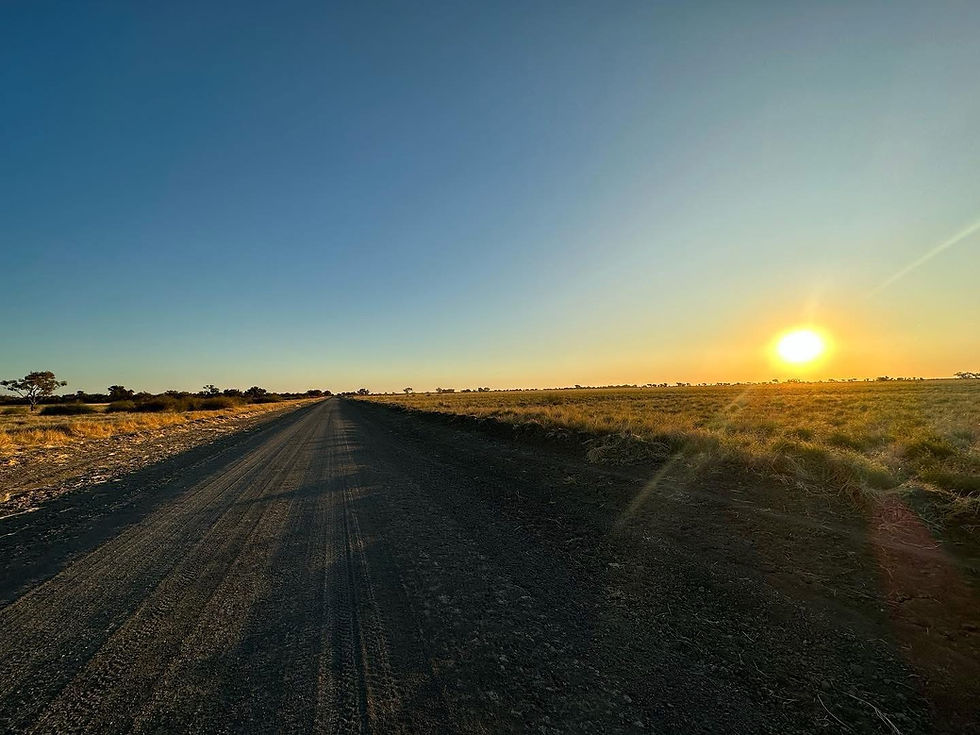
The operating environment for rural and regional businesses has shifted materially through the first half of 2026.
Interest rates remain elevated. Fuel costs continue to be influenced by international supply conditions and temporary government relief. Fertiliser remains expensive. Seasonal conditions have improved in some areas but remain uneven, while stronger cattle prices are changing the forecast position for some livestock operators.
Each of these movements affects rural businesses differently.
For some operators, improved rainfall or livestock prices may strengthen forecast income. For others, higher finance, fuel, freight and input costs may continue to place pressure on margins and working capital.
The practical task is not to respond to every headline in isolation. It is to understand how these conditions interact within the operation’s own cash flow, debt structure, production plan and equipment requirements.
Important information: This article contains general information only. It does not constitute financial, credit, investment, taxation, legal, commodity, agronomic, engineering or business advice. Market prices, interest rates, government policies, seasonal conditions and lender requirements can change without notice. Historical information, forecasts and market commentary should not be treated as guarantees of future conditions or outcomes.Operators should obtain advice relevant to their circumstances from appropriately qualified finance, accounting, taxation, legal, agronomic and other professional advisers before acting.Information currency: Market, policy, interest-rate, fuel and seasonal information in this article is current as at 18 June 2026 unless another date is stated.
Interest rates remain elevated
At its meeting on 16 June 2026, the Reserve Bank of Australia left the cash rate target unchanged at 4.35%.
This followed a 25-basis-point increase in May, which was the third consecutive increase during 2026.
For rural businesses carrying variable-rate debt, those increases may now be flowing through operating cash flow.
The effect will vary depending on:
The amount borrowed
The type of facility
The interest rate and lender margin
Whether the facility is fixed or variable
The remaining fixed-rate term
The repayment structure
Seasonal cash-flow movements
The lender’s assessment of the business
The Bullagreen Brief estimated that a $1 million agribusiness facility could be paying approximately $22,000 more in annual interest than it was in January.
This is a general illustration only. The actual increase for any borrower will depend on the facility balance, applicable rate changes, repayment structure and lender.
Fixed and variable lending conditions
The Bullagreen Brief notes that two-year and three-year fixed-rate products were generally priced above variable rates at the time it was prepared.
That may indicate that parts of the lending market expected interest rates to remain higher for longer.
However, a fixed rate is not automatically more or less suitable than a variable rate.
The decision may depend on:
The borrower’s need for repayment certainty
Expected cash-flow volatility
The cost and duration of the fixed rate
Break costs
Additional repayment restrictions
The structure of the broader facility
Seasonal and business plans
The borrower’s tolerance for future rate movements
Interest-rate forecasts are inherently uncertain and should not be relied upon as a guarantee of future movements.
Why a facility review may still matter
The Bullagreen Brief notes that lending margins have varied across the market and that review opportunities may exist for clients who have not assessed their facilities for 18 months or more.
A facility review does not necessarily mean refinancing.
It may involve assessing:
The current interest rate and lender margin
Facility limits
Repayment terms
Security arrangements
Working-capital access
Seasonal facilities
Equipment finance
Covenant requirements
Whether the existing structure still suits the operation
Refinancing may involve fees, valuation costs, discharge costs, new security documents and changes to terms or covenants.
Any potential benefit should be considered against those costs and the suitability of the proposed structure.
Any finance outcome remains subject to eligibility, lender criteria, assessment and approval.
Oil prices remain exposed to global conditions
The Bullagreen Brief records significant movements in global oil prices through April and May 2026.
It notes that Brent crude reached approximately US$138 per barrel in early April, remained around US$114 at the time of the May RBA meeting and later eased to approximately US$96 per barrel as international negotiations developed.
These figures represent market observations at particular points in time.
Oil prices can move quickly in response to:
International conflict
Supply disruption
Production decisions
Shipping constraints
Currency movements
Emergency reserve releases
Changes in global demand
An easing oil price does not necessarily translate immediately or fully into lower fuel costs for Australian operators.
Exchange rates, freight, refining, wholesale margins, taxation and local retail conditions may all affect the final price paid.
The fuel excise deadline
The Australian Government temporarily halved the excise applying to petrol and diesel from 52.6 cents per litre to 26.3 cents per litre for the period from 1 April to 30 June 2026.
This reduced the excise component by 26.3 cents per litre.
The Heavy Vehicle Road User Charge was also temporarily reduced to zero for the same three-month period.
Unless the Australian Government announces an extension or replacement measure, the temporary relief is scheduled to end after 30 June 2026.
Based on the measures announced as at 18 June 2026, fuel excise is scheduled to return to the applicable full rate from 1 July 2026.
The final amount and timing passed through to customers may vary between suppliers and locations.
Wholesale fuel prices, exchange rates, transport costs, GST and retail pricing decisions may also affect the price paid at the bowser.
As at 18 June 2026, the Australian Government had not confirmed whether the temporary excise relief would be extended.
Operators should monitor official announcements before making decisions based on the scheduled expiry.
Why the change matters operationally
A cents-per-litre movement can appear relatively small when viewed in isolation.
Across the annual fuel consumption of a rural operation, the effect may be material.
Mixed cropping enterprise
The Bullagreen Brief estimates that a 5,000-hectare mixed-farming operation may consume between 100,000 and 150,000 litres of diesel annually across its machinery operations.
A 26.3-cent-per-litre increase in the excise component would equate to approximately:
$26,300 across 100,000 litres
$39,450 across 150,000 litres
These are simple gross illustrations only.
They do not account for:
Fuel Tax Credits
GST
The distinction between on-road and off-road use
Changes in wholesale prices
Supplier pricing
Existing stored fuel
Seasonal conditions
Changes in consumption
Actual cost impacts will differ between businesses.
Livestock operations
Fuel consumption may be lower for some livestock businesses than for cropping operations, but freight exposure can be greater.
A higher diesel cost may flow through transport rates for:
Livestock movements
Feed
Fencing and farm supplies
Machinery
Contractors
Processing and market access
The timing and extent of any freight-price movement will depend on transport contracts, fuel-surcharge mechanisms and individual operators.
Heavy Vehicle Road User Charge
The Heavy Vehicle Road User Charge was temporarily reduced to zero for the period from 1 April to 30 June 2026.
The relief is scheduled to end after 30 June unless the policy changes.
For businesses operating heavy vehicles, the end of the relief may affect Fuel Tax Credit calculations and effective on-road fuel costs.
Operators should confirm the applicable rates and treatment with their accountant, BAS agent, bookkeeper or tax adviser.
Fuel Tax Credits
Fuel Tax Credits may reduce the effective fuel cost for eligible business activities.
The Fuel Tax Credit rate is not necessarily the same as the headline fuel-excise rate.
Rates vary according to:
When the fuel was acquired
How the fuel was used
The type of fuel
Whether the activity was on-road or off-road
Whether the Heavy Vehicle Road User Charge applies
For fuel acquired between 1 April and 30 June 2026, some published Fuel Tax Credit rates are 20.6 cents per litre.
This figure should not be described as the temporary fuel-excise rate.
Businesses should use the rate applying on the date the fuel was acquired and obtain advice from their accountant, BAS agent or tax adviser where necessary.
Why a Fuel Tax Credit review may be useful
The Bullagreen Brief notes that some rural businesses have not reviewed their Fuel Tax Credit methodology for several years.
Areas that may warrant review include:
Off-road and on-road categorisation
Heavy vehicle use
Light vehicle use
Auxiliary equipment
Fuel used in plant and machinery
Records supporting quantities and activities
Changes to the applicable rates
A review should be undertaken with an appropriately qualified accountant, BAS agent or tax adviser.
Bullagreen does not provide taxation advice.
Forward fuel positioning
The Bullagreen Brief suggests that operators with appropriate storage capacity and cash flow may consider whether purchasing fuel before the temporary excise relief ends fits their operational requirements.
This should not be treated as a recommendation to purchase or stockpile fuel.
Before increasing stored fuel, operators should consider:
Safe storage capacity
Environmental obligations
Fire and WHS requirements
Insurance
Fuel quality and contamination risks
Cash-flow impact
Supplier terms
Expected operational use
The possibility of government policy changing
Future movements in wholesale and retail fuel prices
Purchasing fuel before 30 June may preserve the excise treatment applying at the time of purchase, but it does not guarantee that the overall decision will produce a saving once all costs and risks are considered.
Review transport contracts
Ongoing transport agreements may contain fuel-surcharge provisions.
These may:
Adjust automatically with fuel-price movements
Refer to a specific fuel index
Apply after a delay
Require notice
Exclude particular excise movements
Operate differently across routes or services
Operators should review the actual agreement rather than assume the excise movement will be absorbed by the carrier or immediately passed through.
Legal advice may be appropriate where the contract terms are unclear.
Update cash-flow forecasts
Fuel, freight, fertiliser and interest costs can materially change the working-capital position of a rural business.
A rolling 12-month cash-flow forecast may help an operator assess:
Fuel requirements
Freight costs
Interest expense
Seasonal facility utilisation
Input purchases
Tax payments
Equipment commitments
Livestock sales
Crop income
Potential funding gaps
Forecasts are estimates, not guarantees.
They should be updated as market prices, production expectations and actual costs change.
Fertiliser remains a significant input-cost issue
The Bullagreen Brief notes that urea pricing had not eased to the same extent as oil at the time it was prepared.
It records mid-May delivery contracts of approximately $1,400 to $1,450 per tonne, compared with a starting point of approximately $675 per tonne at the beginning of the year.
Those prices are time-sensitive observations and may not reflect current quotes in every region.
Fertiliser pricing may be affected by:
Natural gas prices
International production
Shipping and freight
Currency movements
Northern Hemisphere demand
Supplier inventory
Local availability
Contract timing
Operators should obtain current quotes and agronomic advice before making purchasing or application decisions.
Reducing fertiliser application may lower immediate expenditure but may also affect production, soil nutrition and future rotations.
Those decisions should be assessed within the operating and agronomic context of the business.
Understanding the broader fuel-excise system
Fuel excise has applied in Australia since Federation.
It is indexed periodically in line with movements in the Consumer Price Index unless legislation changes the rate.
Although fuel excise was historically associated with road funding, the Bullagreen Brief notes that the formal link was removed in 1992.
Fuel-excise receipts now form part of general Commonwealth revenue, while eligible businesses may receive offsets through the Fuel Tax Credits system.
The Bullagreen Brief refers to Parliamentary Budget Office figures for 2021–22 showing:
Approximately $18.2 billion in gross fuel-excise revenue
Approximately $6.89 billion refunded through Fuel Tax Credits
Net revenue closer to $11 billion
These are historical figures and should not be treated as current-year revenue data.
Australia’s fuel-security position
As a member of the International Energy Agency, Australia has an obligation to hold oil stocks equivalent to at least 90 days of net imports.
The way fuel stocks are measured can vary.
Different measures include:
International Energy Agency days
Minimum Stockholding Obligation quantities
End-of-month consumption-cover days
These measures are not directly interchangeable.
The Bullagreen Brief raised concerns about Australia’s long-running position below the 90-day International Energy Agency obligation.
More recent government commentary in April 2026 referred to approximately:
44 days of petrol
33 days of diesel
30 days of jet fuel
These figures are time-sensitive and depend on the measurement used.
The Minimum Stockholding Obligation
Australia’s Minimum Stockholding Obligation requires relevant fuel companies to maintain minimum quantities of key transport fuels.
The Bullagreen Brief referred to minimum industry stockholding requirements of approximately:
1,067 million litres of petrol
2,742 million litres of diesel
The Australian Government subsequently extended a temporary reduction to the Minimum Stockholding Obligation for petrol and diesel until 30 September 2026.
The Minimum Stockholding Obligation is an industry requirement and is not the same as a government-owned strategic petroleum reserve.
Domestic refining capacity
The Bullagreen Brief notes that Australia’s domestic refining capacity has reduced over the past two decades.
Australia currently has two major operating refineries:
Viva Energy’s Geelong refinery in Victoria
Ampol’s Lytton refinery in Queensland
The Brief states that approximately 90% of Australia’s refined fuel is imported, principally from countries including South Korea, Singapore, Malaysia and Taiwan.
This import dependence increases the relevance of:
International shipping
Regional refinery availability
Geopolitical disruption
Exchange rates
Domestic stockholding
Port and distribution infrastructure
The equipment and energy-transition conversation
The energy transition affects different rural and regional businesses in different ways.
A passenger vehicle, a long-haul truck, an earthmoving fleet and a 250-horsepower tractor operate under very different duty cycles.
Relevant factors include:
Power requirements
Operating hours
Distance
Refuelling or recharging time
Payload
Equipment weight
Regional infrastructure
Resale value
Reliability
Total cost of ownership
The Bullagreen Brief refers to UK agricultural commentary estimating that a 250-horsepower tractor operating for 10 hours could require a battery weighing approximately as much as the tractor itself.
The Brief further estimates that such a tractor may require approximately 1,500 to 1,800 kilowatt-hours of energy, potentially translating to a battery pack of approximately nine to 12 tonnes at current energy densities.
These figures are general engineering illustrations included in the source material.
They should not be relied upon as specifications for any particular machine or equipment decision.
No single technology suits every task
The practical transition pathway may involve a mix of technologies and fuels suited to different tasks.
For example:
A light passenger vehicle may have different requirements from a grain truck
A tractor working continuously under load has different requirements from an intermittently used vehicle
A civil contractor may assess plant utilisation differently from a livestock operator
Regional charging or refuelling infrastructure may limit available options
Residual values and maintenance requirements may vary between technologies
The appropriate equipment decision should be based on the business case rather than the technology label alone.
Cleaner and more efficient equipment
The Bullagreen Brief supports the transition towards equipment that uses less fuel per unit of work, produces lower emissions and offers improved operating efficiency.
Newer equipment may offer benefits such as:
Lower fuel consumption
Improved emissions performance
Longer service intervals
Improved safety systems
Greater productivity
Potential access to specialised lending products
However, newer equipment also carries an acquisition cost.
The most suitable option is not automatically the newest or least expensive machine.
The decision may require consideration of:
Purchase price
Fuel use
Maintenance
Downtime
Productivity
Residual value
Expected operating life
Financing costs
Tax treatment
Cash flow
Operator training
Safety requirements
Bullagreen’s role in equipment conversations
Bullagreen Finance
Bullagreen Finance works with lenders that may offer different pricing or products for eligible cleaner-burning, fuel-efficient or lower-emission equipment.
The availability of any product or pricing benefit will depend on:
The equipment
The lender’s eligibility criteria
The applicant
Credit assessment
The transaction structure
The lender’s policies at the time of application
No particular rate, discount, approval or saving is guaranteed.
Any finance remains subject to eligibility, lender criteria, assessment and approval.
Bullagreen Rural Partners
Bullagreen Rural Partners can help clients consider the broader cost of ownership rather than focusing only on the purchase price.
That conversation may include:
Fuel
Maintenance
Finance
Expected utilisation
Residual value
Operating life
Cash-flow timing
Tax considerations requiring independent tax advice
Bullagreen People and Performance
New machinery and technology may also create people and safety considerations.
These can include:
Operator training
Inductions
Competency
Maintenance procedures
Contractor use
Safe operating systems
Changes to workplace risks
Operators should obtain specialist WHS advice where required.
Rain has improved conditions in some regions
The Bullagreen Brief reports meaningful rainfall across parts of the Central West, Lachlan and Riverina through the second half of May.
It records approximately:
85 millimetres at Dubbo
77 millimetres at Canowindra
69 millimetres at Cowra
120 millimetres at Wambangalang over a 12-hour period
These observations reflect particular locations and dates.
They should not be interpreted as representing conditions across every district.
The Brief also notes that parts of north-eastern New South Wales, New England and southern Queensland remained below desired rainfall levels.
One rainfall event does not establish the final seasonal outcome.
Winter cropping decisions
The Bullagreen Brief identifies three broad approaches observed among Central West operators.
Maintaining the planned rotation
Some mixed-enterprise operators maintained their intended rotation despite the dry start.
This included retaining planned cereals, canola and fallow areas.
The Brief notes that rotation can support long-term yield and disease management.
Changing the plan
Other operators adjusted their programs by:
Reducing nitrogen application
Moving from cereals into lower-input forage crops
Shifting land towards livestock use
Delaying or reducing planned sowing
Each decision may have a defensible operational basis.
However, changes to rotation, fertiliser or land use may also affect later seasons.
Waiting for further information
Late sowing remained possible in parts of the Central West at the time the Brief was prepared, particularly where quicker-maturing varieties were available.
The Brief referred to:
A Rabobank estimate of national winter crop plantings declining by approximately 8% year on year to 23.1 million hectares
Digital Agriculture Services data indicating 6.78 million hectares had reached detectable establishment by mid-May
These are time-specific third-party estimates and should not be treated as guarantees of final planting areas, establishment quality or yields.
Operators should rely on current agronomic advice and conditions relevant to their own property.
Cattle prices and restocker demand
The Bullagreen Brief records that the Eastern Young Cattle Indicator moved above 900 cents per kilogram carcase weight during the period covered.
It also notes an EYCI-eligible average of approximately 1,020 cents per kilogram at a Wagga sale.
The Brief attributes part of the movement to stronger restocker demand following rainfall across multiple regions and relatively tight supply.
It reports that:
Restocker buyers’ prices increased during the period
Restockers represented a larger proportion of EYCI-eligible cattle sold
Demand improved as rainfall increased confidence in some regions
Cattle prices can change quickly.
Sale results from one location or period should not be treated as indicative of the price available for every category, weight, breed or region.
What stronger cattle prices may mean
For producers who reduced herd numbers, stronger restocker prices may increase the cost of rebuilding.
For those carrying saleable stock, stronger demand may create additional marketing flexibility.
For borrowers, improved livestock prices may alter forecast revenue and serviceability assumptions.
This does not mean a lender will automatically change its assessment or approve additional finance.
A lender may consider:
Historical and forecast income
Stock numbers
Costs
Seasonal conditions
Existing debt
Security
Repayment capacity
Management experience
Sensitivity to future price movements
Any lending outcome remains subject to lender criteria, assessment and approval.
Practical actions before 30 June 2026
1. Review the scheduled fuel-excise change
Consider how the scheduled end of the temporary relief may affect:
Stored fuel
Fuel purchases
Freight
Contractor rates
Heavy vehicle costs
Fuel Tax Credits
Cash flow
Any decision to purchase or store fuel should consider safety, storage, insurance, environmental and cash-flow requirements.
2. Review Fuel Tax Credit methodology
Confirm that fuel use is being categorised and documented appropriately.
Obtain advice from a qualified accountant, BAS agent or tax adviser.
3. Review transport contracts
Identify how fuel-price or excise movements are treated under existing agreements.
Seek legal advice where contract terms are unclear.
4. Update the cash-flow forecast
Incorporate current assumptions for:
Fuel
Freight
Fertiliser
Interest
Crop expenditure
Livestock income
Equipment commitments
Seasonal facilities
Use a range of assumptions where future prices or production remain uncertain.
5. Review lending facilities
Where facilities have not been assessed recently, consider whether their limits, terms, margins and structure still suit the operation.
A review does not guarantee refinancing, approval, reduced interest costs or another financial benefit.
Actions through the second half of 2026
6. Monitor fuel policy
The fuel-excise and Heavy Vehicle Road User Charge relief remains temporary.
Monitor government announcements rather than assuming the relief will end or be extended.
7. Reassess equipment plans
Review planned equipment purchases against:
Utilisation
Fuel efficiency
Maintenance
Resale value
Financing costs
Safety
Training
Cash flow
8. Update seasonal production assumptions
Rainfall, sowing progress, crop establishment and livestock prices should be reflected in updated forecasts as conditions become clearer.
9. Consider livestock marketing options
Stronger demand may create opportunities for some operators, but the appropriate timing depends on:
Stock condition
Feed availability
Seasonal outlook
Freight
Market access
Debt
Replacement costs
Broader production plans
Obtain livestock, market or agricultural advice where required.
The operating environment has rebalanced
The underlying pressures have not disappeared.
Interest rates remain elevated. Fuel relief is temporary. Fertiliser remains expensive. Seasonal conditions differ materially between regions. Cattle prices have strengthened, but future movements remain uncertain.
These conditions reward operators who:
Maintain current financial information
Update forecasts
Understand their facility structure
Monitor input costs
Document assumptions
Review equipment on total cost
Seek specialist advice where required
The purpose is not to predict every market movement.
It is to ensure the business can respond to changing conditions with better information and a clearer view of its financial position.
Want to discuss your current operating position?
James Brouff works with agribusiness operators, commercial borrowers and farming families across regional Australia.
To discuss your current lending structure, equipment requirements or broader operating position, reach out directly.
M: 0461 374 585 | E: james@bullagreen.au | W: bullagreen.au
Information in this article is general in nature and is current as at 18 June 2026 unless another date is stated.
Interest rates, fuel and commodity prices, government policies, taxation settings, Fuel Tax Credit rates, seasonal conditions, lender requirements and market conditions may change without notice.
Figures, forecasts, market observations, scenarios and examples are illustrative only. They do not guarantee future prices, production, rainfall, savings, costs, profitability, lending outcomes or financial performance.
This content does not constitute financial, credit, investment, taxation, accounting, commodity, agronomic, environmental, engineering, legal or business advice.
Obtain advice from appropriately qualified professionals before making a financial, taxation, equipment, production, fuel, transport or other operational decision.
General information only. This content does not constitute financial or credit advice and has been prepared without considering your objectives, financial situation or needs. Lending is subject to eligibility, lender criteria and approval.
Bullagreen Finance | Credit Representative 571331 | Australian Credit Licence 389328
Any examples of borrowing costs, potential savings, facility reviews or equipment-finance options are illustrative only.
Interest rates, fees, terms, lender policies and eligibility requirements vary and may change. Refinancing or changing a finance facility may involve fees, valuation costs, discharge costs and other consequences and may not be suitable for every borrower.
Bullagreen does not guarantee finance approval, a particular interest rate, lender discount, operating saving, equipment outcome, market result or future financial performance.


Comments